Acting for camera is not a smaller version of acting for stage. It’s a different job, and it’s very learnable.
The camera changes everything
On stage you’re playing to row R. The performance has to reach a person forty metres away who can’t see your eyes.
On screen the lens is half a metre from your face and the audience will be watching it three metres wide. Everything that worked on stage now reads as enormous.
Stage actors moving to screen are almost always doing too much. Screen actors moving to stage are almost always doing too little. Both are quick fixes once you know what you’re adjusting.
What we work on
- Scale. How much less you need to do, and how to trust that a thought will read without being demonstrated. The hardest and most valuable adjustment.
- Stillness and thought. The camera is interested in what you’re thinking, not what you’re showing. Learning to actually think the thought, and let the lens find it.
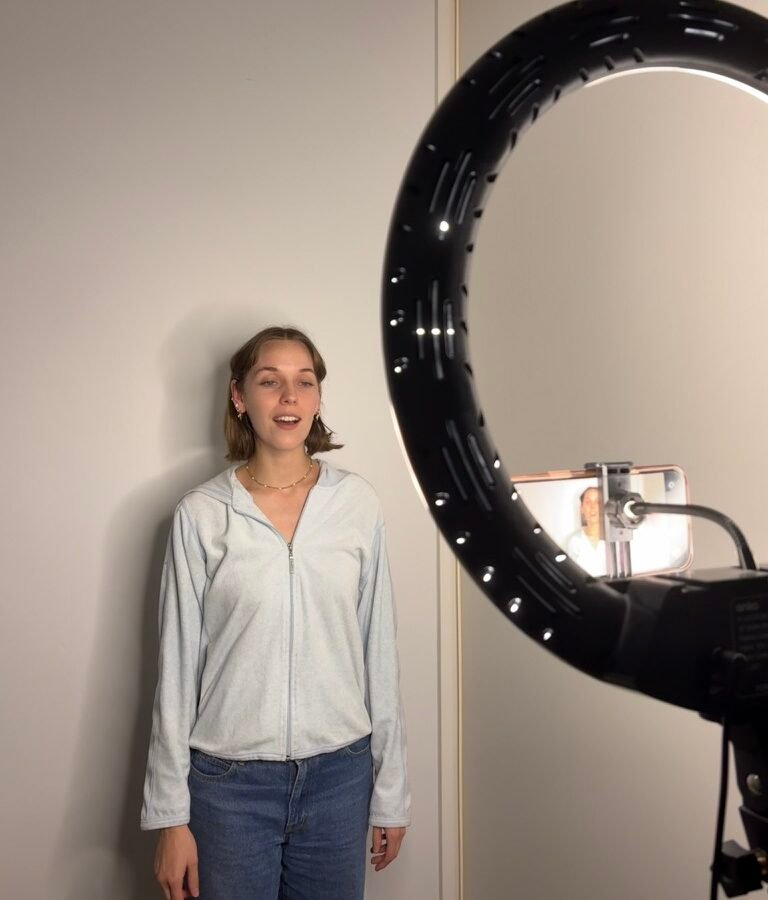
- Being comfortable on camera. Most people are self-conscious in front of a lens and it shows immediately — usually in the eyes and the jaw. This is largely a matter of exposure, so we record constantly and watch it back.
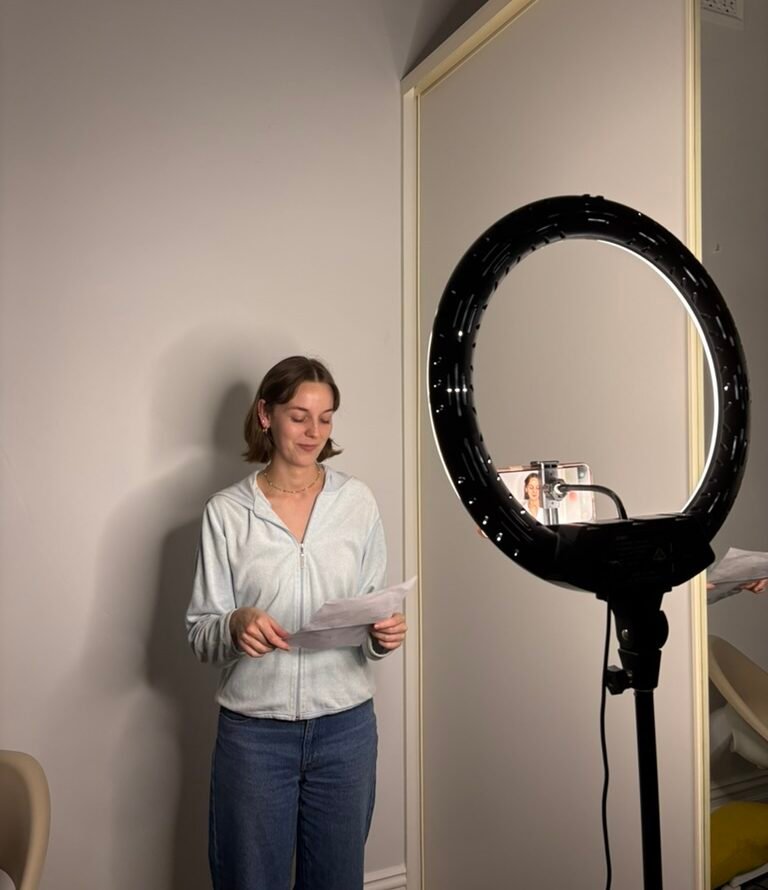
- Technical craft. Eyelines, hitting marks, matching your own performance across takes, continuity, and playing to a tennis ball where an actor should be.
- Working with the camera operator. Frame sizes, what a close-up means for your performance, and why the sound recordist keeps asking you to say it again.
- Self-tapes. Recorded and reviewed in the lesson. More on self-tape sessions →
We watch it back
Every lesson involves recording and reviewing. It’s uncomfortable for the first two or three sessions and then it isn’t, and there is no substitute for it — screen acting is the one discipline where you can see exactly what the audience sees, and not using that would be strange.
Who it’s for
Stage actors moving to screen — the most common reason people book this.
Actors who audition on self-tape and want the tapes to be better.
Young performers starting out, building confidence on camera early.
Anyone who has to appear on video for work — presenting, pieces to camera, video calls that matter. The skills transfer directly.
Prices
| Lesson | Price |
|---|---|
| Trial lesson (30 min) | $20 |
| 30 minutes | $35 |
| 45 minutes | $55 |
| 60 minutes | $75 |
Screen work needs 45 or 60 minutes — recording and reviewing takes time, and the reviewing is where the learning happens.
Related:
Self-Tape Recording → ·
Audition Preparation → ·
Acting & Drama →